



Marlin Communications: Then & Now - A retrospective with Founder & Idealist Karl Tischler
— Interview by Jenni Whittaker, General Manager at Marlin Communications.
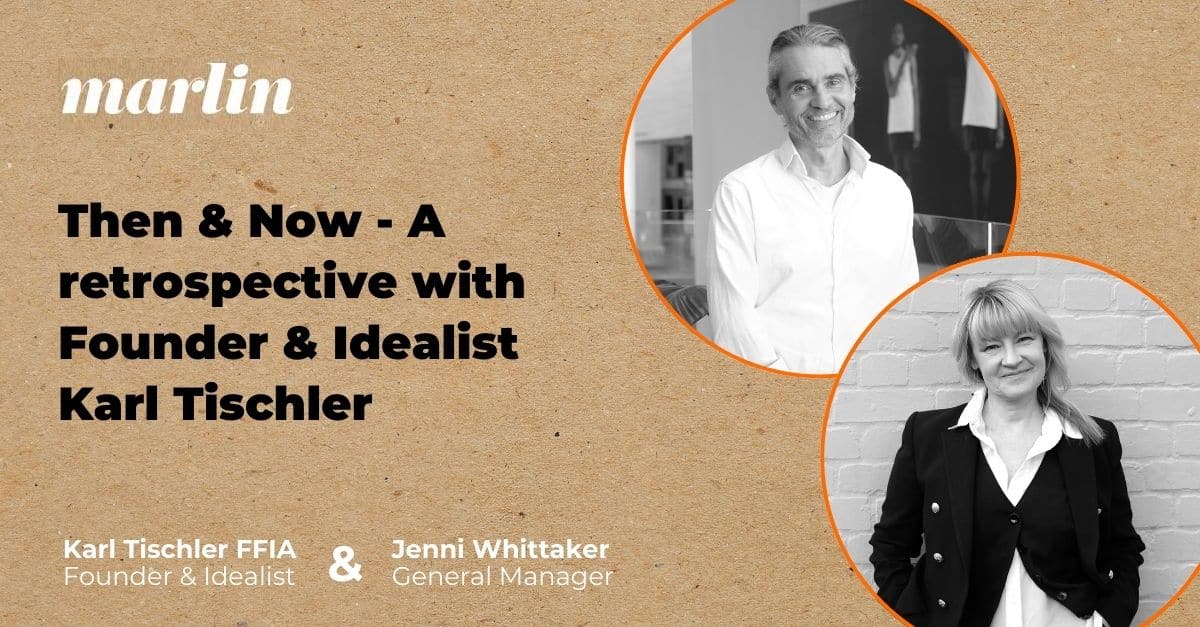
In this special conversation, Marlin Communications General Manager Jenni sits down with our Founder and Idealist, Karl, to reflect on the journey that shaped Marlin Communications into the agency it is today. It’s a rare and candid exploration of why Marlin exists, the personal experiences that guided its beginnings, and the deep commitment to social impact that continues to steer the organisation forward.
Across this interview, Karl shares the story behind Marlin’s origins, the challenges that tested him, and the convictions that have kept him anchored to the charity and not-for-profit sector for more than two decades. From life-changing personal hurdles to the everyday realities of agency life, he speaks openly about what motivates him, what he believes the sector needs now, and the future he hopes Marlin will help shape.
What follows is a thoughtful and deeply human look at purpose, resilience and the power of meaningful work—told by the person who first imagined what Marlin could be.
What originally motivated you to start Marlin Communications and what personal belief or experience made you commit to working with charities and not-for-profits specifically?
Over the years, I have thought a lot about this and about my own personal ‘why’.
Several years ago, I did the Australian Progress Fellowship. It was life changing. I learned about the idea of public narrative and had to develop my own. I did a session with the team at the time, and the extract below is from that work. I believe it captures the heart of your question.
Here goes:
In 1999 I started Marlin Communications.
I had recently returned from overseas and needed a job, so I began working with a mix of commercial and not-for-profit clients, mainly in graphic design and print.
I fell in love with working with causes and charities and it was something I wanted to pursue further.
However, I had to consider my epilepsy. I say “had” because that chapter is now behind me.
I was lucky to have loving parents. My mum cared deeply and my dad cried for the first time when he heard my diagnosis.
He held two expectations for me. On one hand, I could do anything I wanted. On the other hand, because of my epilepsy, he thought that maybe I should be aiming for something safer, more secure.
He gave me the moral and ethical compass I use every day and the sense of ambition that guides me. Yet he would often say it was probably best to just get a council job.
Falling into working with charities was not only lucky, it was fortuitous. The sector I found myself in was understanding, kind and at times forgiving of me and my condition.
Fast forward a decade and my epilepsy was getting worse. My medication was becoming ineffective to the extent that I would actually have seizures in front of clients. Falling down stairs and falling apart became commonplace.
I had to find a way to control my seizures, so I made the decision to have frontal lobe brain surgery. I almost died three times. It took several years to recover, moving from being an incoherent mess who struggled to put two simple sentences together to the person you see today.
My life has always been one where I refused to let epilepsy define me, but it certainly shaped me.
Fast forward to now.
I no longer have seizures.
I have a lovely wife and two gorgeous girls.
I have a thriving agency and work in the sector I love.
I have the security of knowing where my next meal is coming from.
And yet I often ask myself: what is the use of having all this comfort if so much of what I value lies beyond it? What if the things that matter to me most also feel the most threatened?
I did not survive everything I went through to be average or comfortable. I want to bring energy and conviction into our sector. I want people to feel that the causes and charities we serve are worth fighting for. I want us all to move beyond comfort and toward feeling part of a solution.
That’s why I am here. In my day-to-day work, I want to use my time, skills and the agency I started to do some good in the world.
Over the years, Marlin has supported small, medium and large organisations in Australia and abroad – what keeps you energised and motivated?
It has to be the causes and charities we serve.
In particular, it is always the client contacts. The people who think and feel in similar ways and have chosen to spend their careers working in charities.
Our work is hard. That is not an exaggeration. Changing hearts and minds and encouraging people to give their money, time and voice is relentlessly difficult. But it is entirely worth it.
When we experience success, when we see people act differently, it is a genuine buzz.
That, and my garden. To be frank, without that solace and space I think I would have lost my mind long ago.
When you reflect on the hardest moments of building Marlin Communications, what has kept you anchored to the mission rather than shifting to more commercial work?
There was never really an option of doing more commercial work. Not because I wasn’t able, but because the kind of skills and experience Marlin has developed are very niche. I now view this as a strength. It creates a moat that differentiates the business and has real value.
There is also a kind of quiet hardship that comes with this, which is bittersweet. After a while, I felt in my bones that I was doing profoundly meaningful work with Marlin, but you also start to feel there are no other paths. You become wedded to the business.
This is going to sound a bit cheesy, but despite those hard moments, I also know that the work we’re doing is quite possibly the most important work of all. It is work that matters.
We’re energised by seeing our clients succeed and highlighting those wins. Is there a standout insight from 2025 that has reshaped the way you think about the sector or the work we do?
I think there are two parts to this. The first is Marlin-specific. The second is sector-specific.
The key realisation for Marlin in 2025 was that our small agency can be a business that does good and be a good business.
On the sector side, this reveals my bias, but this year we are seeing the importance of gifts in Wills gaining real momentum. The second insight is something I have always believed. Charities need to invest where the greatest return is. That is major donors.
A lot of major donor programs have real potential but need more structure and more intentional supporter care to truly succeed. That’s what we’re aiming to bring to the table here at Marlin.
Looking ahead, what change do you hope Marlin will help create in the sector over the next 5–10 years, and what personally excites you most about that future?
Let me start with a cliché: change is constant. There is nothing we can do about that except adjust and adapt. I often catch myself thinking that if we can just reach a level of stability things will feel easier, but that is never going to happen.
However, just because change is constant and often overwhelming does not mean it should steal our attention or our time.
When I feel overwhelmed by the volume of information and pace of change, I try to ask myself what never changes. It is calming, but it is also revealing. The answer to that question is people’s capacity to care and to be compassionate. This is also a constant.
Years ago, I read George Smith’s book ‘Asking Properly’. He wrote that the three greatest words in charity are ‘pity, love and compassion’. That will never change.
Every generation has its bias, and I have long believed that the next five to ten years will be the most consequential of any in recent memory. Why? Because in ten years the realities of climate change will be felt in ways our social and political systems simply cannot absorb. This is irreversible. Once it happens, we will not return to what was.
As humans, we will do what we have always done. Our greatest strengths are cooperation, adaptation and resilience.
The role I see Marlin playing aligns with our brand promise. Lives are saved, rebuilt and improved through the actions of social change makers.
No one should feel hopeless or forced to accept the status quo. No one should feel too insignificant to shape their life or change their world.
I do not see the future as bleak, but I see it as profoundly shaped by climate change. Demand for the work our clients do will increase dramatically. And this will happen in an environment flooded with communications. Who do people listen to? Who do they trust? Will they prioritise some causes over others? How will we continue to express our humanity?
In this environment, the role and value of persuasive creative will skyrocket.
The change I hope Marlin creates, and the one that excites me most, is our ability to meet this moment with truly persuasive communications. Work that recognises human behaviour does not fundamentally change. Kindness, compassion and love will always matter most.
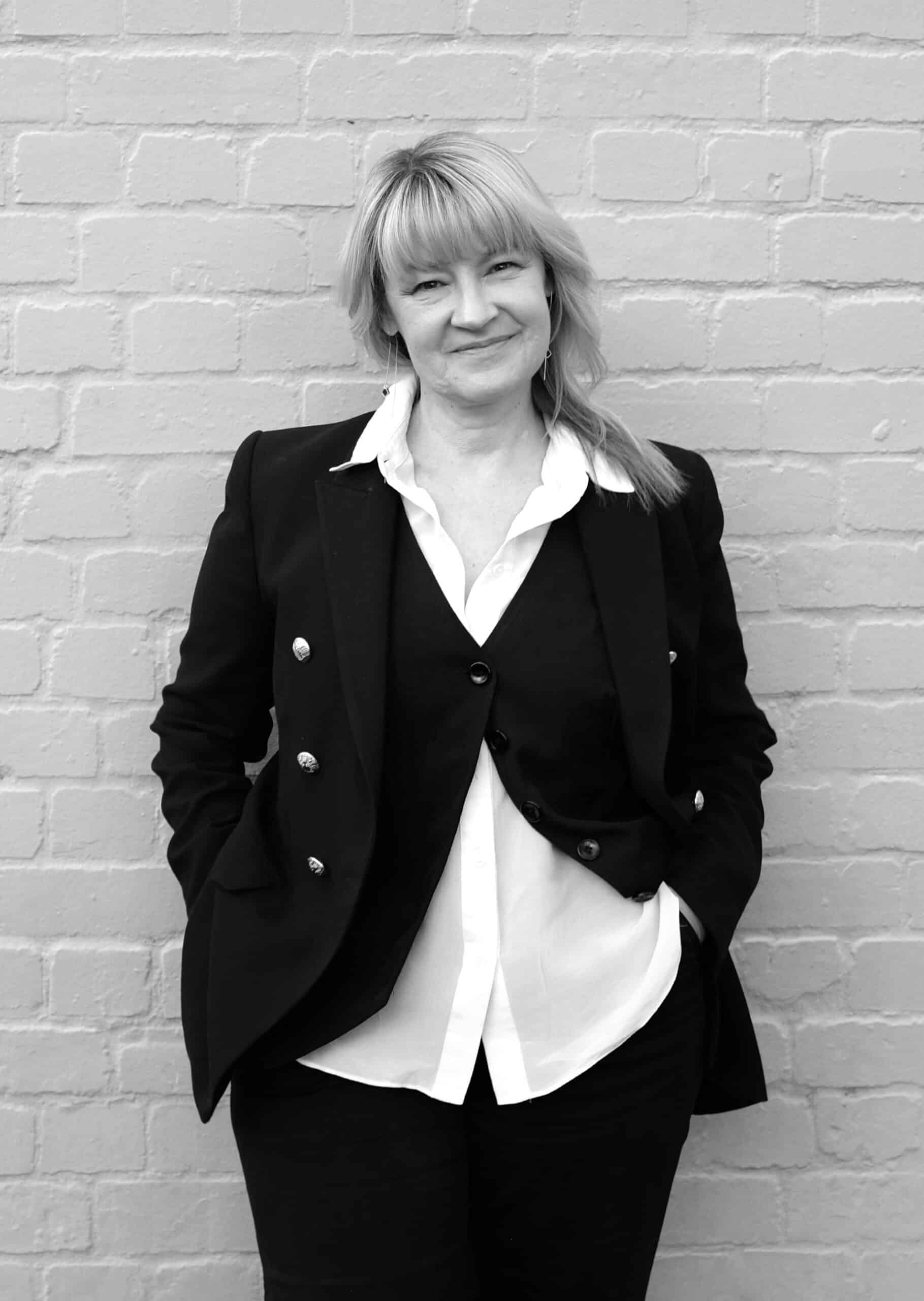
Jenni Whittaker, General Manager
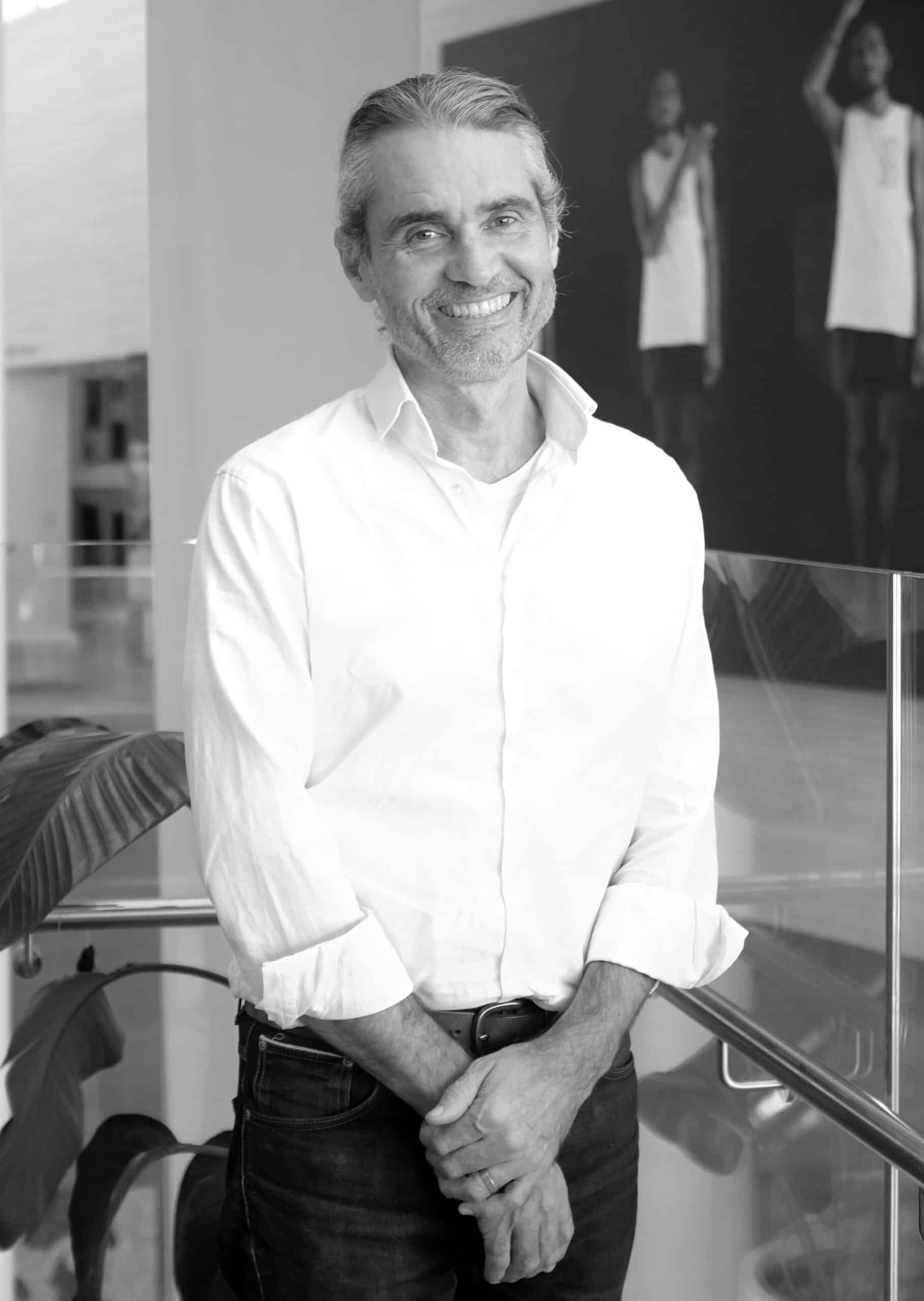
Karl Tischler FFIA, Founder & Idealist